
In most industries you can pilot a new system, learn from the results, and adjust as you go.
In regulated manufacturing, that is not an option. Every change must be proven safe before it can be used. I remember the first time I saw a validation binder so thick it needed its own shelf. It made perfect sense. When people’s health, safety, or food supply depend on what you produce, there is no room for uncertainty.
That is what makes these industries both challenging and fascinating. They stand to gain the most from digital transformation, yet every new idea has to meet the same bar as the process it aims to improve. At Helixer we have learned that progress in these environments is not about speed, it is about earning trust.
Why Data Change Is Hard When Nothing Can Fail
Whether it is medical devices, aerospace, pharmaceuticals, or food production, regulated industries share the same reality: compliance is not a department, it is a mindset. Every temperature, material lot, and parameter must be traceable.
Digital change here is never plug-and-play. New systems have to live alongside established workflows, preserve audit trails, and prove that they are as reliable as the paper logs they replace. Even a small pilot can take months of testing before it is cleared for use. This is not hesitation or bureaucracy. It is respect for the process. And it is exactly why a different approach is needed.
Over the years, we have seen a clear pattern. The most successful digital transformations follow a reliability-first model. They move carefully, but once trust is earned, they move fast.
Start small. Focus on one process where improvement is measurable but risk is low.
Test safely. Build in a sandbox and verify every step before it touches production.
Involve QA early. Their validation mindset keeps the foundation solid.
Keep a manual fallback. Confidence grows when people know there is always a safe option.
Scale gradually. Once reliability is proven, growth happens naturally.
Progress accelerates when everyone trusts the process. We have seen this approach work again and again, including in one of the most tightly regulated environments in the world: medical-grade ceramics.
Proof in Practice: CAM Bioceramics
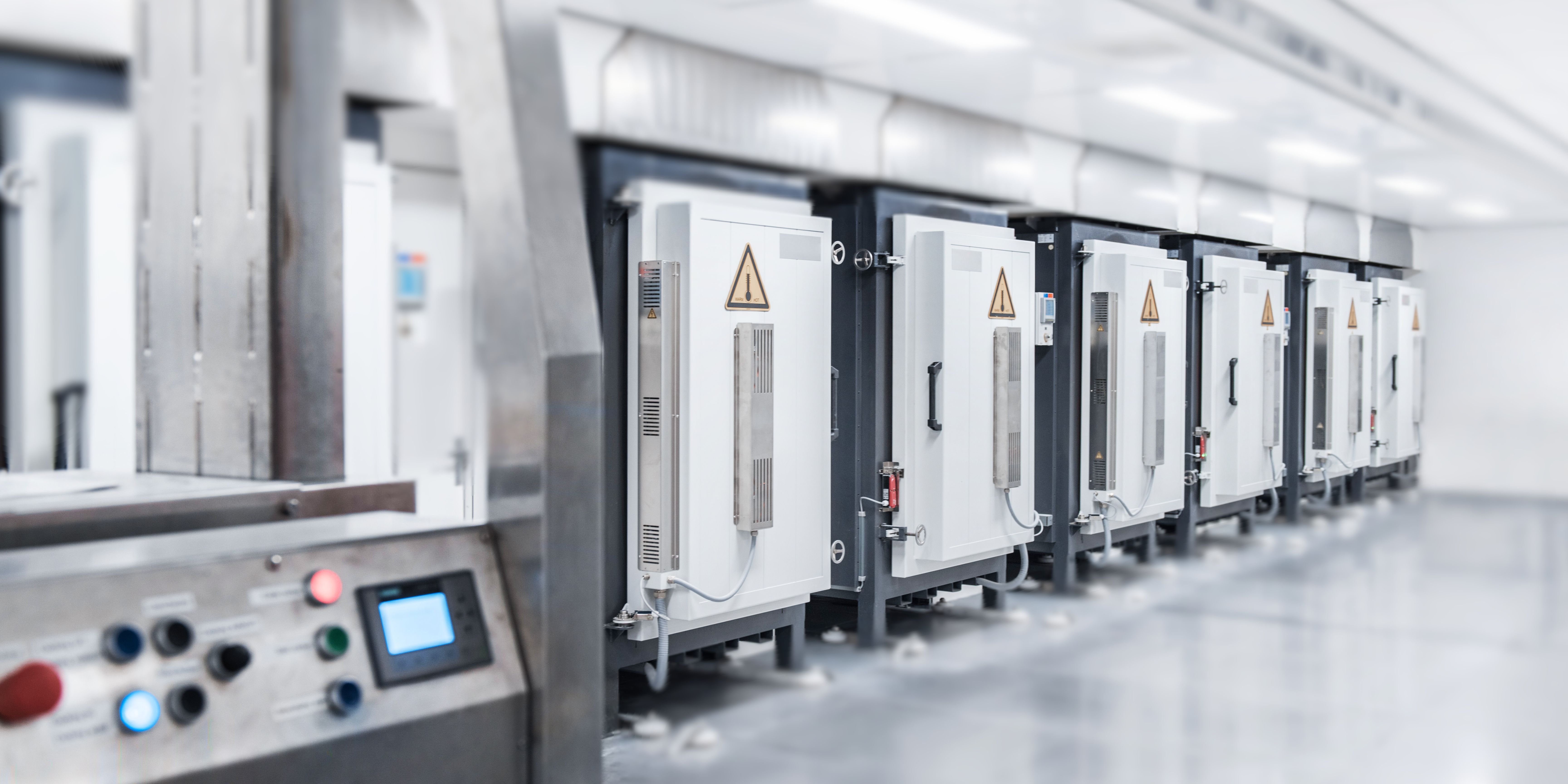
CAM Bioceramics produces hydroxyapatite and beta-tricalcium phosphate for implants and coatings that go inside the human body. Every run of their high-temperature sintering furnaces must comply with ISO 13485, FDA, and EU MDR standards.
Together we focused on automating the validation of those furnace runs without changing the rigor of the process itself. Helixer OS monitored multiple temperature zones in real time, automatically detecting when each run started and ended, and when the sintering stage began and finished. The system wrote sub-second accurate timing data directly into CAM’s existing QA system, confirming that all temperature zones stayed within limits.
The result was full traceability without manual input. QA review time dropped by 75 percent, data precision increased tenfold, and every record was instantly audit-ready.
A side effect was that the data became more visible. A live dashboard now shows every furnace, every run, and every temperature curve. Anyone can look back at a specific batch and see exactly what happened, moment by moment.
The project started as automation, but it ended up doing something more important: it gave people confidence in their data. Once that happened, new ideas began to surface. We have seen this same pattern across many industries. When teams trust their data, transformation follows.
It is easy to think regulation slows innovation, but in practice it often does the opposite. It forces precision, and precision builds trust. Once that trust is established, people are free to explore what is next.
At CAM Bioceramics that trust became a catalyst for new thinking. The same principle applies anywhere reliability defines quality, from aerospace to food safety. Reliable data is what allows organisations to move from compliance toward curiosity.
Transformation in regulated environments does not begin with AI or automation. It begins with trust in the numbers.
Want to learn more about what Helixer OS enabled for CAM Bioceramics? Download the case study.
Raising the Bar Across Manufacturing
If real-time validation can be automated in one of the world’s most tightly regulated industries, it can be done anywhere precision matters. The model is simple: start small, prove reliability, and scale safely.
At Helixer, we lay the data foundation for smart, compliant, and scalable transformation where every improvement starts with trusted insight.
See for yourself how our unified data layer connects your people, processes, and machines: contact us.